


Thursday, November 24, 2011


Tuesday, November 22, 2011
Devaluation

(Click on image to enlarge)
Sunday, November 20, 2011
The Good Fight

Gambling and politics is about winning or losing. Our Coalition is about doing the right thing, win or lose.April 2009
-- Tom Larkin, President
United to Stop Slots in Massachusetts
Gazing up Beacon Hill, it might as well be Kilimanjaro.
For some reason, Frank had dropped us off in the middle of Park Street, which tilts up toward the State House at what feels like a 45 degree angle, leaving Judy and me to hold what we now realize are the world's heaviest signs.
We were supposed to have a nice day for this event, but it's early. Right now it's still dark and cold and drizzly and all of Boston is lacquered with a depressing coat of fog. Worse, for me anyway, today is what people with a chronic pain condition politely call, 'a bad day.'
Earlier this week my son and I had made the signs with six sheets of poster boards and a new pack of sharpies. I'd bought some tall wooden stakes to nail to the back, and Judy had volunteered her husband, a retired carpenter, to add some sturdy wood frames so they wouldn't curl up.
It sounded like a good at the time. And the signs do look great - but now each of them weigh about a ton. Maybe more. And they're all different sizes, making the bunch of them even more awkard and difficult to hold.
We tried putting them down on the sidewalk, but it wasn't much wider than the signs, and they were blocking pedestrians. Just then a cop car went by and we decided we couldn't chance it. The putting down and lifting up were worse than the holding on to, so we just stood there trying not to look as desperate as we are. I try to hide the wince from Judy. Nobody needs a buzz kill.
We each call Frank about six times, but either his phone is off or he's parking the car in Worcester. He should be back here by now.
I don't have the cell phone numbers of any other folks who might be here already. So I send a text message to a friend who's always early, a colleague with the brawn to carry maybe three of these signs up all by himself.
Need your help.
And, for the first time in about two years, he doesn't text me back. Which is how I learn he's not coming out anymore. He's done.
And why shouldn't he be? How many times can people learn how little their efforts translate into Beacon Hill currency before they give up? You only get noticed if you're part of a crowd. You'll only be recognized if you're wealthy or well positioned. And you'll only be listened to, it seems, if you if you can do something for them.
It's been getting harder and harder to get people to come out. I've got some 'maybes' for today, and I'm grateful for that. I know it's hard to juggle life. Thank God for Judy and Frank. I think it's coming down to us. Even so, I've told them I'm done at the end of June - of course, before June we have about a million things to do. Seems like it, anyway.
It's been a good stretch. A year and a half more than I thought it'd be. Now I'm tired, I'm sick. Let someone else do it.
We don't even have the luxury of broadcasting our events to get more people here. We have to get the word out over the network, or else the union will call out the troops, all in matching t-shirts and lunch vouchers, to shout us down.
And if not the unions, then the flying monkeys - the squadron of fellow locals motivated more by venom and vendettas than a social conscience - all frothed up and seething on comment sections and message boards to anyone who'll listen.
But you have to believe you can make a difference, don't you? I mean, what's the alternative?
So I stick around, I show up, I beg people to come out, and, I guess, l carry some heavy-ass signs up a perpendicular sidewalk when they don't. Just another adventure in activism.
A guy walks by with his hands in his pockets, glances up at our signs, and gives me a look that says he'd rather be giving me the finger.
In the last two years, if there was ever a moment I thought I could just quit, just drop it all and go back to my old life, to leave the whole damn thing in the rearview mirror, it was that one.
But I know someone's waiting up there on the Hill for us. And I think, hey, maybe this is the one that'll do it. This is the one.
So I hand Judy four of the signs, and help prop her up against a parking meter, then take the remaining two under my arm. The pain is unreal. It slices me in two. But what choice do I have?
This started out being about a casino. Now it's about so much more. It's about what's right and wrong. About whether you fight or you give up. It's about letting the greedy stupid bastards with all the money and power push you aside, or showing them that, even if they do, you're never, ever, going away.
Just then, on the sidewalk at the top of the hill, through the fog and the gloom, is a familiar silhouette. The silhouette of someone who's never come out with us before, someone who I'd asked, but didn't think actually would.
But there she is. And sure, she's a senior citizen with her own chronic pain condition - but hey, I can work with that.
In my world, one person can still make a difference.
And usually does.

Thursday, November 17, 2011
Together We Scam!
While experts from MIT and Harvard have testified repeatedly at legislative gambling hearings about the potential for addiction engineered into today's slot machines - touched on earlier this year in an episode of 60 Minutes - a colleague who works in the field of Business Intelligence recently shared a letter he wrote to Governor Patrick explaining other predatory practices the gambling industry employs to separate slot players from their money.
Keep in mind that slot machines account for two-thirds of casino revenue.
Like many other industries, the gambling industry collects information about their existing and potential customers to increase sales, encourage customer loyalty, develop marketing strategy etc. However, because casinos are 'financial institutions', they
The first, GCA Casino Share Intelligence
It's not like putting the milk at the back of the supermarket to get people to buy more Captain Crunch.
After everything Americans have endured at the hands of corporate predators in preceding years, is it really advisable for our State to partner with them at this stage in the game? In an age when people have mobilized in outrage over debit card fees, imagine how they'd feel about the State-sanctioned shell game casino billionaires get to play with our bank accounts.
Keep in mind that slot machines account for two-thirds of casino revenue.
Like many other industries, the gambling industry collects information about their existing and potential customers to increase sales, encourage customer loyalty, develop marketing strategy etc. However, because casinos are 'financial institutions', they
have access to all of an individual's financial information. They leverage this specialized status and "loyalty programs" to gain specific knowledge about how much cash and credit a patron has access to, when they use their credit cards in the casinos. The industry calls this Total Cash Availability.The letter provides three links which demonstrate "how the casino industry collects and uses the financial and game-play data to identify patrons who can be tapped for more revenue."
Additionally, they will also be able to find out how much equity a patron has in their home, car and other assets; this is called Global Cash Availability. These can and will be taken as equity in exchange for credit. Casinos will also extend what amount to payday loans at high interest rates. These will be offered to patrons who are under the influence of alcohol, alcohol, that the casinos will be able to offer free of charge.
The casino industry uses all of this information along with real-time game-play data to make targeted offers to specific people. They are also able to alter the payout rate and the "near-misses" seen by each person to increase their rate of play and the amount per play.
The first, GCA Casino Share Intelligence
shows that casinos have access to all of your financial information as well as transactions outside of the casinos as soon as you use your credit or ATM card in one of their machines.The second is a promotional page for GameVIZ Software
which brags about this software's ability to identify "the most profitable customers and those which can be 'tapped' for additional revenue and profit." This software identifies these gamblers while they are playing and helps identify them for promotions. This software targets people to ply with free liquor. It is not a random offering.The third is a link to a patent for a method and system for dynamically awarding bonus points
which describes in detail how machines can be dynamically reconfigured to generate more revenue while they are being played by increasing the rate of play and reducing payouts.While it's convenient to dismiss gambling as a mostly harmless form of entertainment, effecting only a small percentage of people, fact is, the gambling industry is increasingly engaging in furtive, predatory practices that can quickly deplete an individuals or an entire family's financial resources, for substantial profit - a large chunk of which it will share with the State.
Let me be clear. The methodology is as follows:
1. The casinos identify their patrons and prospects according to their potential value to the casino.
2. The casinos monitor the play of those patrons and determine when to offer them free alcohol to maximize their spend on the games.
3. The casinos then dynamically alter the speed at which the machines play and the rate at which they pay out to increase the profit they are making on a specific player.
4. When the player has exhausted his or her resources on hand, the casinos extend them credit.
It's not like putting the milk at the back of the supermarket to get people to buy more Captain Crunch.
After everything Americans have endured at the hands of corporate predators in preceding years, is it really advisable for our State to partner with them at this stage in the game? In an age when people have mobilized in outrage over debit card fees, imagine how they'd feel about the State-sanctioned shell game casino billionaires get to play with our bank accounts.
All that this market fundamentalism is about is letting people's consciences off the hook. If the market is “just,” none of us is responsible for the havoc it may wreak. But the invisible hand of the market need not be free of ethical values, and ought not be.
Deval Patrick wrote that, in his memoir. And I couldn't agree more.
Saturday, November 5, 2011
My iRobot Vacuum Cleaner is More Sentient than Greg Bialecki
I think this editorial in the Globe by Citizens for a Stronger Massachusetts articulates one of the problems with Greg Bialecki, Deval Patrick's Secretary of Housing and Economic Development:
Now, in seeking to minimize his role in the gambling bill, Bialecki claimed in an interview that he was never Patrick’s “lead person’’ on casinos and instead describes himself as “the spokesperson for the administration’s position.’’ On the day that he testified, he said, he was handed “a three-page document’’ that was “prepared by others, without my input.’’Unless by "best person for the job" you mean "mouthpiece for the gambling industry", and by "economic development" you mean "an unvetted economic policy that has never solved any state deficit, has already opened the door to political corruption here in Massachusetts, and is poised to trigger a gambling arms race to the bottom here in New England," then... yeah. Definitely.
He paints a damning picture, both of his own lack of sensitivity to appearances, and of an administration that appears to be so committed to its gambling deal with legislative leaders that it would put words in the mouth of its own secretary of housing and economic development.
If Bialecki doesn’t know what’s going on with his personal finances or what’s going into the public policy he promotes, maybe he isn’t the best person for the job of secretary of housing and economic development..
Wednesday, November 2, 2011
Attack of the 50 foot Egos

This year's recipient of the Stan Rosenberg Award for Unwarrented Hubris in a Legislative Role is none other than Joseph Wagner (D-Chicopee)!
Wagner, who sits on the six-member gambling bill conference committee believes that a one-year ban on government officials from working in the gambling industry - which originally started as a five year ban - is still way too harsh, because:
“It’s my sense that this matter is so important that we should not preclude the best and the brightest from being eligible even if those people would be in government presently,”Following this statement, the Committee once again quickly scurried to safety behind closed doors.
 Not surprisingly, Stan Rosenberg, (D- Amherst) the senator for whom the Unwarrented Hubris award's was created, also serves on the committee, a prerequisite for which would appear to be narcissistic personality disorder.
Earlier this fall, during the Senate 'debate' on the gambling bill, an ammendment to create a five year ban on legislators from working in the industry compelled Rosenberg to notoriously argue that:
"passing such a no-revolving-door amendment would actually contribute to public cynicism about lawmakers by creating the impression that such a restriction was necessary to protect the public trust and ensure integrity.”After convening that discussion behind closed doors, the Senate decided to drop the ban from five years to one.
It remains to be seen as to whether, following the current closed door session, the Conference Committee will, in the best interests of the industry, reduce the one-year ban even further and mandate legislators a guaranteed full year of casino employment upon leaving office, to include a lifetime pension and an automatic MacArthur Genius Fellowship.
Tuesday, October 18, 2011
Trickle Up

BOSTON – Both House and Senate
leadership announced today that they've agreed to go back to work in order
to add a new amendment to the same gambling bill which passed
through both houses in the preceding months.
But in what is perhaps an odd
coincidence, the announcement came directly on the heels of a
Commonwealth Magazine op-ed which cited several studies which would indicate that expanded gambling disproportionally harms minorities
and the poor - "especially blacks and specifically black women" according to the op-ed.
Research suggests that while most people who gamble can do so
without a problem - the majority of casino profits, to the tune of 70% – 90 % - are derived from patrons who are problem and
pathological gamblers.
When asked about the timing of the
amendment, the Senate's "casino-guru” Stanley Rosenberg (D –
Irony) insisted that the amendment wasn't intended to take advantage
of any particular demographic for the purpose of increasing revenue,
but rather to provide what is obviously a popular entertainment
attraction in regions of the state where they have been previously
unavailable.
“Since most people can game
responsibly, this amendment actually helps those members of the poor and minorities
who might otherwise be unable to afford transportation to gaming opportunities in
distant areas of the state” said Rosenberg.
Senate President Therese Murray
responded to questions about the studies by stating that, “These studies
are clearly elitist and don't show the whole story. This amendment
has nothing to do with taking advantage of the poor and minorities.
On reflection, senate leadership merely realized that casinos and
slot parlors should ideally be located in areas where people have
given up hoping for a job that pays a living wage."
When asked asked if he felt the studies
were cause for concern, House Speaker Bob DeLeo dismissed the idea,
stating that research also suggests that “rich white men have also been negatively impacted
casinos... casino investors haven't been immune from the recession,
you know.”
When asked to comment about the new
amendment, Governor Patrick responded “I think it's a move in the
right direction, one that actually offers more protection to the poor
and minorities.”
Patrick, a self-professed practitioner
of social justice, continued, “Locating casinos in
predominately white or affluent neighborhoods across the state would
just impact the poor and minorities even more. Look, we all know that they're
the ones who'll be stopped and harassed by local police on their way
home through the suburbs."
The Governor added, "I mean, it's bad enough to lose your shirt
at a casino, but then to wind up with an expensive ticket or jail
time - now that's a real economic hardship.”
Thursday, October 13, 2011
The Back of the Bus
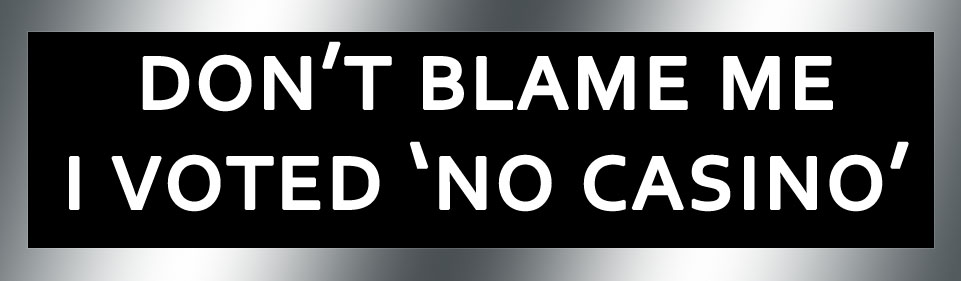
A salvo in the war on slots was fired the other day, and was, as usual, serially ignored by the Governor, the Mass. Legislature and the media.
Of course, if the news had been something positive about casinos and slot barns, the Governor would have mentioned it on a talk radio program, the Mass. Legislature would have enshrined it as proof they had done due diligence, and, without a doubt it would have aired on the evening news along with stock footage of flashing lights, roulette wheels, and acres of slot machines.
In fact, if either Professor and part-time casino shill Clyde Barrow or his parent company, UMass Dartmouth had put their names on it, it would suddenly be considered a piece 'public policy'.
But no. It was produced by a mere former State Attorney General and a cadre of learned volunteers, and failed to paint a sexy rosy unblemished picture of the future of gambling - oh I mean gaming - in Massachusetts.
So it went unnoticed.
See a pattern here?
It's not just us. People across this state, from Progressives to Tea Partiers to Occupy Bostonians to middle-aged moms from Bridgewater are getting fed up with our inability, no matter what we do, to be heard by the people with the power. Or heck, even acknowledgment that we exist.
As far as the media is concerned, black bears who beat up backyard bird feeders get more attention these days than Massachusetts citizen volunteers working hard to present a balanced view of an issue that will effect us all.
Four and a half years ago, I could tell myself it was all a fluke, that the folks in government, the journalists, are so busy, so overwhelmed with information and with requests to be heard... that we just needed to try harder. But we have tried harder. We've tried for years, and when you watch the Senate do things like repeal the Happy Hour law for casinos, it feels like it's all made little difference.
And what does that say about a democracy by and for the people?
Perhaps Senator Stan Rosenberg (D -Amherst) holds the key:
“What lobbyists and interest groups buy is access,’’ Rosenberg said. “They don’t buy votes.’’Yeah, Stan, but it buys access.

And that does buy votes.
Listening to one side all the time can do that to a lot of people.
It's like when my mother started watching Fox news all time, then started believing that Obama was a practicing socialist Muslim who was born in Kenya.
For the record, here's what they're all ignoring about the gambling issue - a press release containing a new analysis of potential economic impacts of casinos and slot barns that was issued by Citizens for a Stronger Massachusetts. If you're a Massachusetts citizen, you might want to take the time to read it:
“The public is being sold a bill of goods and our new analysis should blow the rose-colored glasses off proponents and force them to rethink this poor excuse for economic development and local aid,” said Scott Harshbarger, president of Citizens for a Stronger Massachusetts. “Those lining up behind this bill must be doing it to support some other constituency because the numbers being thrown around by proponents simply don’t add up.”
- Proponent job estimates are at best, wildly optimistic. The U.S. Department of Commerce estimates that, for every $1 million diverted from household spending in Massachusetts, the state loses 8.2 jobs. Casino supporters estimate they will produce between $300 million and $450 million in tax revenue. That revenue will come from diverting between $700 million and $1.3 billion from household spending to casinos, killing between 5,700 and 10,600 Massachusetts jobs – approximately the same number of permanent jobs claimed by casino supporters.
- Local aid will be hurt, not helped, by casinos. The consensus of all studies predicts a 5 percent to 10 percent decline in Lottery revenue after the arrival of casinos. At the House estimate of $1.2 billion in taxable gaming revenue (nearly double what state residents now put into casinos), that means a potential loss of $90 million or more in local aid to cities and towns.
- Revenue estimates are, at best, rosy and completely out of date. The Governor said state residents already drive to Connecticut casinos and “spend $1.5 billion dollars . . . right now”. The House said casinos would generate $1.2 billion. The Senate now claims $1.8 billion to be had for Massachusetts.
The back-up for these figures appears to be based on “pre-recession” reports that are extraordinarily outdated. The most recent data from UMass/Dartmouth’s 2011 study shows that the amount gambled and lost by Massachusetts residents in Connecticut casinos was merely $486 million (and $613 million overall). At the proposed 25 percent casino tax rate, this equates to only $121 million in gaming tax revenue, of which only 20 percent to 25 percent is going to local aid. Recapturing all of this revenue would produce only $30 million in new unrestricted local aid to cities and towns.
- The giveaways in this bill are stunning in an era when confidence in Beacon Hill is at an all-time low. The bill puts tens of millions of dollars at the disposal of the unaccountable political appointees of the Gaming Commission, in perpetuity, to spend in its discretion without legislative oversight. Hundreds of millions of dollars more will be dedicated to other unspecified state projects each year. This bill is a feeding frenzy for special interests.
Oh... and get this new chart - which follows the money as per the new gambling bill, currently being debated by the senate.

But heck, I'm sure that the Governor has already tossed it in the circular file, that the Senate has hit the delete button, and that the media is busy putting together a much more important story about a Kardashian sister or a funny new viral video cat video.
In the meantime, here's one for the 'irony column'.
Senate President Therese Murray dismissed opponents’ concerns about job creation as "elitist," contending that any new job created by a casino would be welcomed by someone who is without a job.Yes, the same Therese Murray whose behavior at last year's gambling debate compelled me to create this:

Yes, the same Therese Murray who, during the current debate, shooed her Senate brethren behind closed doors where, away from prying eyes, they peeled 4 years off an amendment banning them from going to work for the casino industry after leaving office.
And yes, the same Therese Murray whose actions, after returning to the Senate podium afterward compelled someone in the chamber to yell, "Let them eat cake!"
Yes, that's the same Therese Murray who thinks that gambling opponents are elitist.

And her main minion, Stan Rosenberg? Remember last year when, after coming under fire for using taxpayer money to fund a benefit only report, he said,
United to Stop Slots should commission its own independent study on costs. “Go do it,” he said. “But they have no intention of doing it.”So look, now expanded gambling opponents have our own study. It's not exactly 'independent'. But then, neither is Stan's. So what's the legislatures 'casino guru' got to say about it? Apparently nothing.
Maybe he just can't hear us from the back of the bus.
I don't know if Progressives or Tea Partiers or Occupiers will be able to bring about real change on Beacon Hill or Wall Street - but I hope so. If I've learned anything these last few years, it's that predatory billionaires gaining more and more access to a tone-deaf government and a failing fourth estate just makes the world a crappier place for the rest of us.
But in the meantime, don't overlook the potential contributions of us middle-aged women. I mean, a lady named Rosa Parks refused to give up her seat on a bus and sparked the civil rights movement.
Come to think of it, I think Madame DeFarge was a middle-aged woman too.
Thursday, September 29, 2011
Integrity

We're knights of the round tableWe dance whene'er we're ableWe do routines and chorus scenesWith footwork impeccable.We dine well here in CamelotWe eat ham and jam and spam a lot.
STATE HOUSE, BOSTON, SEPT. 27, 2011…..Senate leaders lashed out Tuesday over a proposal issued by a gambling opponent that would have restricted lawmakers from working for casino operators for five years after they leave office.
After a heated debate in which three senators ripped the proposal as an unfair indictment of all public servants, Senate President Therese Murray called a sudden Democratic caucus in her office.
After an hour behind closed doors, members emerged and quickly voted to support a scaled back version of the amendment, barring lawmakers from working for a casino applicant for one year after leaving their posts.
The amendment passed 36-1 with only Sen. Michael Rodrigues (D-Westport) dissenting.
On second thought, let's not go to Camelot. It is a silly place.
Monday, September 26, 2011
Getting Played
Do you suppose that local TV news stations know when they're getting played?
See, I watch a lot of news over the course of a day - mostly Channel 7 (WHDH) at morning and midday, and Channel 5 (WCVB) in the evening and late night. Usually, the news is just background noise while I work, but naturally, when there's some sort of gambling story it gets my attention.
So imagine the battle for my attention as I watched, over the course of one 24 hour news cycle, the same story running, nearly word for word, on both of my favorite TV News stations. Over and over and over again. Only the co-anchors seemed to change.
The story? Well, apparently, the day before the Senate sat down to debate the latest gambling bill, a poll was released!
The poll was conducted by... wait for it... UMass Dartmouth Center for Public Policy (which needn't bother sending my 11th grader a college brochure) which indicated... you'll never guess... that a majority of Mass. residents want a casino! Yay!!
Wow, what an incredible coinkydink.
UMass D (for D), the taxpayer-funded rock under which licence-plate-counting resort-casino-evangelist, Clyde Barrow remains coiled for most of the year, releases a pro-casino poll, at the very moment when our state senators are suddenly remembering that they've forgotten to do their annual two minutes worth of homework on the casino issue, just hours before deciding whether to sign the worst gambling bill in a decade into law, and shoots it off in an e-mail, on college letterhead and in tightly written text, to all the local news outlets.
My, what a godsend. Like Cliff Notes with video.
Why is it that none of TV news stations mentions a similar poll, performed by Western Mass. College from two years ago? A poll that produced exactly the same figure as UMass D - 56% in favor of a casino. Could it be that the results of this particular poll also revealed that 57% of respondents opposed a casino where they live.
Which is kind of funny when you remember that map, the one with the 3 circles encompassing a 50 mile radius around 3 hypothetical casinos, illustrating the area where all the negative impacts from one casino tend to settle.

Ok, sure, if you want to quibble, you could argue that the black dot where Middleboro is should now slide southwesterly and park itself in either Fall River or New Bedford. But still, when you add Deval's concessionary slot parlor in Raynham or Plainville to the mix - you're still looking looking at a triple whammy for Central and Southeastern Mass, the North Shore and the Cape.
Now, let's just say, hypothetically, that 100% of all Mass residents were aware of that map - which in reality, only a fraction of a fraction of a half a percent actually do - and then a pollster from UMass called a random sampling of folks from across the state and asked if they were feeling all sunny and positive about a casino in Massachusetts.
Would you suppose that particular statistic would still be hovering around 56 %. Or even over 50%.
Because if you do, you're dreaming.
But what do any of these pesky factual nuances matter to the journalistic heroes of TV news, when they can get a free pre-digested news story, along with an academic stamp of approval, and an opportunity to roll all that neat casino stock footage.
Maybe I'm a little sensitive, because last week members of the USS-Mass coalition sat down with Greg Bialecki, Secretary of Housing and Economic Development and his staff, to discuss the current gambling bill and later issued this press release titled:
GAMBLING OPPONENTS QUESTION ADMINISTRATION’S GRASP OF EXPANDED PREDATORY GAMBLING ISSUES.
Which the media ignored entirely.
It reads:
Or be informed by a real story about a major piece of legislation, promoted by our Governor, that will create a new tax-payer funded bureaucracy, increase crime and social costs, that won't solve our fiscal woes or create as many jobs as promised, and which the Governor's own top adviser fails to even remotely grasp?
We're just sitting here waiting for your call Heather Unruh...
Still accepting interviews, Adam Williams...
C'mon and help us Hank!
See, I watch a lot of news over the course of a day - mostly Channel 7 (WHDH) at morning and midday, and Channel 5 (WCVB) in the evening and late night. Usually, the news is just background noise while I work, but naturally, when there's some sort of gambling story it gets my attention.
So imagine the battle for my attention as I watched, over the course of one 24 hour news cycle, the same story running, nearly word for word, on both of my favorite TV News stations. Over and over and over again. Only the co-anchors seemed to change.
The story? Well, apparently, the day before the Senate sat down to debate the latest gambling bill, a poll was released!
The poll was conducted by... wait for it... UMass Dartmouth Center for Public Policy (which needn't bother sending my 11th grader a college brochure) which indicated... you'll never guess... that a majority of Mass. residents want a casino! Yay!!
Wow, what an incredible coinkydink.
UMass D (for D), the taxpayer-funded rock under which licence-plate-counting resort-casino-evangelist, Clyde Barrow remains coiled for most of the year, releases a pro-casino poll, at the very moment when our state senators are suddenly remembering that they've forgotten to do their annual two minutes worth of homework on the casino issue, just hours before deciding whether to sign the worst gambling bill in a decade into law, and shoots it off in an e-mail, on college letterhead and in tightly written text, to all the local news outlets.
My, what a godsend. Like Cliff Notes with video.
Why is it that none of TV news stations mentions a similar poll, performed by Western Mass. College from two years ago? A poll that produced exactly the same figure as UMass D - 56% in favor of a casino. Could it be that the results of this particular poll also revealed that 57% of respondents opposed a casino where they live.
Which is kind of funny when you remember that map, the one with the 3 circles encompassing a 50 mile radius around 3 hypothetical casinos, illustrating the area where all the negative impacts from one casino tend to settle.

Ok, sure, if you want to quibble, you could argue that the black dot where Middleboro is should now slide southwesterly and park itself in either Fall River or New Bedford. But still, when you add Deval's concessionary slot parlor in Raynham or Plainville to the mix - you're still looking looking at a triple whammy for Central and Southeastern Mass, the North Shore and the Cape.
Now, let's just say, hypothetically, that 100% of all Mass residents were aware of that map - which in reality, only a fraction of a fraction of a half a percent actually do - and then a pollster from UMass called a random sampling of folks from across the state and asked if they were feeling all sunny and positive about a casino in Massachusetts.
Would you suppose that particular statistic would still be hovering around 56 %. Or even over 50%.
Because if you do, you're dreaming.
But what do any of these pesky factual nuances matter to the journalistic heroes of TV news, when they can get a free pre-digested news story, along with an academic stamp of approval, and an opportunity to roll all that neat casino stock footage.
Maybe I'm a little sensitive, because last week members of the USS-Mass coalition sat down with Greg Bialecki, Secretary of Housing and Economic Development and his staff, to discuss the current gambling bill and later issued this press release titled:
GAMBLING OPPONENTS QUESTION ADMINISTRATION’S GRASP OF EXPANDED PREDATORY GAMBLING ISSUES.
Which the media ignored entirely.
It reads:
…coalition leaders were dismayed by the absence of answers to questions about revenue, regulations, jobs and social impacts.Now I ask, would you rather get played by a taxpayer-funded strategically-timed story written by pro-gambling interests, running on all news outlets that simply reveals how little people still fully grasp about casinos.
“We were shocked to learn they did not have answers to simple questions”, stated Tom Larkin, President of United to Stop Slots.
- How much revenue is expected, short and long term?
- How many jobs are expected short and long term?
- What are the financial costs to the state to set up the regulatory structure?
- What will be the effect on the State Lottery?
- How are projections derived to estimate gambling addiction and money spend or lost in Connecticut?
- What plans do the Administration have to constrain political corruption?
“An independent cost-benefit analysis has never been done by the Administration, therefore, they cannot provide straight answers to basic questions”, concluded Larkin.
- How much gambling revenue will come from “new” money as compared to the redistribution of existing money?
Or be informed by a real story about a major piece of legislation, promoted by our Governor, that will create a new tax-payer funded bureaucracy, increase crime and social costs, that won't solve our fiscal woes or create as many jobs as promised, and which the Governor's own top adviser fails to even remotely grasp?
We're just sitting here waiting for your call Heather Unruh...
Still accepting interviews, Adam Williams...
C'mon and help us Hank!
Thursday, September 15, 2011

Thursday, May 5, 2011

Monday, March 28, 2011
The Boz
Four years ago when I scrambled to find some information on what casinos could mean for me, my town, and for Massachusetts, some of the first words I read were those of Former Rep. Dan Bosley of North Adams.
The Boz researched the subject of expanded gambling since 1996, always trying to look at things from a financial standpoint, as well as from a long-term vs. short-term perspective. And not surprisingly, he always found that it was bad economic policy.
When the issue ignited in 2007, starting down the street from where I sit right now, Dan became a champion to those of us fighting casinos and slot parlors, flying monkeys and the myth of inevitability from our home computers, in library meeting rooms, at town hall podiums and on sidewalks.
Unlike any of the others in this debate with his or her hands on a gavel, when Dan chaired the 2008 public hearing on Deval Patrick's 3 casino plan, he sat through 16 hours of testimony, allowing everyone as long as they needed to speak, and making gambling lobbyists wait as long as anti-casino activists.
The Boz was also one of the issue's greatest debaters, and in 2010 he debated it again on the floor of the House for the last time. His last speech on the issue, taken right before the House voted to expand gambling, is here. I hope you'll take the time to watch.
Thanks for everything, Boz. Thanks for never giving up the good fight.
You'll be missed.
The Boz researched the subject of expanded gambling since 1996, always trying to look at things from a financial standpoint, as well as from a long-term vs. short-term perspective. And not surprisingly, he always found that it was bad economic policy.
When the issue ignited in 2007, starting down the street from where I sit right now, Dan became a champion to those of us fighting casinos and slot parlors, flying monkeys and the myth of inevitability from our home computers, in library meeting rooms, at town hall podiums and on sidewalks.
Unlike any of the others in this debate with his or her hands on a gavel, when Dan chaired the 2008 public hearing on Deval Patrick's 3 casino plan, he sat through 16 hours of testimony, allowing everyone as long as they needed to speak, and making gambling lobbyists wait as long as anti-casino activists.
The Boz was also one of the issue's greatest debaters, and in 2010 he debated it again on the floor of the House for the last time. His last speech on the issue, taken right before the House voted to expand gambling, is here. I hope you'll take the time to watch.
Thanks for everything, Boz. Thanks for never giving up the good fight.
You'll be missed.
Wednesday, January 5, 2011
Must See TV

I've known about this for some time, but the cynic in me has refused to believe it was going to actually happen until I saw it for myself. Because, first there was the build up, the buzz, the speculation. I counted the hits on the web site, then Kathleen Norbut had a phone interview. But it all seemed to go nowhere.
Then, we got word that it was going to air in June. Then it was postponed to October. Then, it would happen sometime before the end of the year. So I guess I just started to assume it would never air, or perhaps, it just was a figment of my imagination that an investigative news program as outstanding as 60 Minutes would take on this subject when so many others have managed to ignore.
Then, yesterday, I got confirmation that the show will, in fact, be airing this Sunday.
Still, I don't know what they're going to cover in the segment, and having watched how the media has covered this topic for the last years, I have full reason to expect a softball fluff piece that comes down easy on the predatory gambling industry and the politicians who love them. As an added bonus, they could rub some salt in the wound by painting predatory gambling opponents as preachy moralists hell-bent on screwing our fellow Americans out of casino jobs and tax revenue.
But, since 60 Minutes has devoted a great deal of it's air time these past 43 years to interviewing whistle blowers, exposing frauds and uncovering shady boiler room operations, I've decided to be something I'm usually not when it comes to gambling coverage - I'm hopeful.
I've watched 60 Minutes all my life. I know that Morely Safer has always worn checkered shirts and what Mike Wallace looked like with eyebrows. I remember when a young Meredith Vieira started as a correspondent alongside and equally young Steve Kroft, and how she was fired over a controversy involving the need to breast feed her baby on set. I remember that, before Andy Rooney, 60 Minutes featured a fun two-person debate at the end of each program called Point CounterPoint, which became the basis for the infamous SNL sketch where Dan Akroyd would preface every argument by calling Jane Curtain an "ignorant slut". I was there, a sixth grader on the playground trying to drum up some concern over the crisis in Cambodia at recess because of a 60 Minutes episode.
Then there were those dark days in the mid-90's when pressure from their parent company forced 60 Minutes to put the kibosh on an important upcoming segment revealing how the Tobacco industry was attempting to make cigarettes more addictive. And perhaps that is where my trepidation comes from. Because certainly, slot machines and cigarettes share a similar business model.
At the State House hearing on expanded gambling last summer, a crew from 60 Minutes was there. In fact, some of them were sitting behind a group of us from the anti-predatory gambling organization USS-Mass. At several points during the day, State Senator Marc Pacheco made glowing comments about what he felt was the fine and impartial work of New England's own infamous gambling industry evangelist, UMass Dartmouth Prof. Clyde Barrow - followed invariably by the audible sarcasm of Team USS-Mass.
One of the Senator's misinformed comments in particular was so comically inaccurate that it produced an impromptu burst of laughter from our row. And while the Senator looked down at us, typically perplexed as to what was so funny, a member of the 60 Minutes crew sensed a potential lead, scribbling the professor's name in his notebook. I know this because I turned around to witness it, and noticed he'd misspelled Barrow's name. For a moment, I thought to whisper the correct spelling to the young man behind me. Then I came to my senses.
The 60 Minutes crew left immediately after the testimony of MIT professor Natasha Schull and Harvard/Mass General Researcher Dr. Hans Brieter, both of whom did an incredible job that day - their fourth time testifying and answering the questions for the Mass. legislature regarding the addictive and deceptive features of the modern slot machine, and it's dramatic effects on human brain chemistry.
I have no real idea what the 60 Minutes segment is going to cover, but I hope they include some video of our Mass. senators and congressmen in action, lapping up the promises of the industry while paying halfhearted lip service to those who offered up figures on crime and addiction and quality of life. I hope they mention the babies and children left to fend for themselves at home, or on in casino parking lots or on side streets while their parents are lost in time, succumbing to a device purposely designed to play them to extinction.
I hope they will include interviews with both Schull and Brieter, and others, like Les Bernal who formed StopPredatoryGambling.org and who brought together a committed, nationwide network of expanded gambling opponents. And I hope they take a few moments to talk to Professor Sandra Adell of the University of Wisconsin, who wrote the compelling Confessions of a Slot Machine Queen. I hope they make the point that our state governments are partnering with an industry that plays it's citizens for suckers.
I know they'll tell us how many billions the industry rakes in each year, and how much it creates in revenue. But I hope they'll be fair and show the other side. The side which the media has neglected to mention for over 30 years - until a majority have come to see the gambling industry as some sort of harmless adult Disney World and a welcome purveyor of job creation and economic stimulus. (As long as it's not in their town.)
And then I remember the member of the Town Democratic Committee who admitted to me one sunny day as I tried to get her to read a pamphlet, that she didn't care if slot machines caused a new type of addiction. "We need the money", she said.
We need the money.
So, I wonder if the 60 Minutes interview will be able to change minds, or even alter the debate. Because when it comes to greed, even the greed for funding to support the good things, for the causes we care about, we can all easily develop a blind spot.
And that's the wall that keeps hitting us in the face.
I don't know how some people have lasted as long as they have in this fight. I'm am personally so fried after only three and a half years that I'm crisp on the edges and dust in the middle. After some of the things I've heard and seen, after the experience of being an activist in a cause a lot of people either think is either lost or don't believe in at all, after all the time spent, seemingly for nothing... after all the research, the writing, the anxiety, the personalities, the juggling, the traveling, the urgency, the fighting, all the beating my head against that wall... after all the believing that my country, my state wouldn't allow something so wrong... after all that time being on edge, being ignored, being so emotionally invested, so determined and yet so repeatedly disappointed in ways I never could have imagined as I watched a Cape Cod Indian Tribe celebrating something called 'federal recognition' on the news one late night in February of 2007.
It was a long time ago that I could count on being recharged by the electricity of my new circle, my new colleagues, new adventures, new trials, all working, laughing, planning, all on the same course. Those were days when the time flew, that effort could resemble pleasure, when words trickled effortlessly from my fingertips, expectations were few and rewards were plentiful. And yes, there were bad times as well, but there was also support. There was always a willing shoulder or open ear. The book was open to just one page - and we all were on it.
That time didn't last long, but the longing for it did and kept me going for longer than it should.
I have a friend who often reminds me that Martin Luther King would take an entire month off every year to rest and re-charge. Since he was the head of a activist movement that changed the world, I took that to mean that I should only need the odd afternoon off, maybe to catch a movie or treat myself to something nice. But I've learned it doesn't work that way. Greetings from Burnoutville.
So like I said, this time, I'm hopeful. Hopeful that 60 Minutes can, with this story, make a difference in the way the industry operates, and the way the media presents it. And the way we've begun to perceive it. And I'm thankful, desperately thankful, that they took on this complex, neglected subject. Thankful it was 60 Minutes above all other news programs, because nobody does it better. And hopeful that fifteen minutes on National TV can do more than I have personally accomplished in all these sometimes exhilarating, mostly exhausting years.
But I'm thankful mostly that this Sunday night, after more than 30 years, the opponents and victims of predatory gambling are finally getting a shot at a real soapbox.
Because we have one hell of a story to tell...
Friday, December 24, 2010
Lassoing the Moon
This summer, despite every tea leaf in it's favor, legislation to bring predatory gambling to Massachusetts went down in an eleventh hour defeat.
And in just the past few days, Congress chose not to pass a "Carcieri Fix" into law, a Massachusetts Appeals Court judge denied the city of Fall River's request to overturn a preliminary injunction stopping the casino land deal, and the CBS program 60 Minutes is preparing to air a segment on slot machines at the very moment the Mass Legislature will begin drooling once again over the prospect of gambling legislation.
It's a wonderful life.
Happiest of Holiday's to all the angel activists out there who've earned their wings.
Love, Gladys
And in just the past few days, Congress chose not to pass a "Carcieri Fix" into law, a Massachusetts Appeals Court judge denied the city of Fall River's request to overturn a preliminary injunction stopping the casino land deal, and the CBS program 60 Minutes is preparing to air a segment on slot machines at the very moment the Mass Legislature will begin drooling once again over the prospect of gambling legislation.
It's a wonderful life.
Happiest of Holiday's to all the angel activists out there who've earned their wings.
Love, Gladys
Thursday, November 25, 2010
Can you imagine...

This is the Fourth Thanksgiving I've posted this picture, and I'm wondering if it's been a good luck charm.
Because on a warm night in May of 2007, I was told a casino was inevitable, a "done deal" and given a conservative date of only 18 months from shovel to slot machine.
And yet, here we are, on the brink of 2011, and there are still no slot machines, no casinos, and no Indian land in trust in Massachusetts.
You may believe that this been due to fortune, fluke or fate, or merely the unpredictable path of politics.
But rest assured, at it's heart, at it's center, has been the constant efforts of activists, experts, senators, representatives and concerned citizens providing the Commonwealth with a conscience and a reality check these past three and a half years. Chipping away at myths and lies and the damage done by millions of dollars in influence. Making differences in ways even they might find hard to imagine.
Because real success in America comes from hard work, not a roll of the dice.
And so, for all those who've done so much to keep Massachusetts slot machine and casino free, let's give thanks.
And if three people do it - three - can you imagine - three people walking in,
singing a bar of Alice's Restaurant and walking out... They may think it's an
organization. And can you... can you imagine fifty people a day - I said
fifty people a day - walking in singing a bar of Alice's Restaurant and
walking out. And friends... they may think it's a movement.
- Arlo Guthrie
Wednesday, November 3, 2010
A Night on the Towne
I've often longed to be a restaurant critic. Quietly occupying at a new table every night, anonymously sampling food and drink and service - then sharing my findings with the world without so much as a single dish to wash in the morning.
Of course, being a restaurant critic on the South Shore is sort of like being the bolt inspector at a bolt factory. I mean, there are just so many ways you can go with it. Eventually you will run out of ways to describe the deep fried, carb-heavy, creatively-challenged sameness of the cuisine here in God's country.
And so last night's dinner at Towne Boston, a trendy new eatery on Boylston Street was a treat and a half for this weary palate.
It was a special occasion for the family, and I decided it was high time we celebrated in style. A few weeks earlier we'd been entranced by a restaurant segment on Chronicle, which featured Towne Boston, and highlighted it's unique fifteen-item Lobster menu - in addition to it's equally mouthwatering main menu. Sealing the deal, Towne was a collaboration between two local food icons who'd helped lift Boston out of the Bad Food Age - Jasper White and Lydia Shire. How could anyone go wrong with that?
And the experience was probably as close to I'll ever come to feeling like a guest judge on Top Chef. Even the three delicious tiny spreads that came with the bread basket required copious explanation from our heavily-accented server. But it was dessert, in the form of a sparkling foot-high beehive of brown sugar cotton candy that wafted onto our table like a fantasy ballet, which elevated our experience to another gastronomic level all together.
Because let's face it. You're never going to see that sort of thing at the Fireside.
And then, as if things couldn't get cooler for our swank-deprived family, a serious faced food magazine crew set up shop on the table next to us, aiming the most complicated looking camera lenses I've ever seen at bottles of wine and bowls of bisque and plates wood-fired crispy duck.
And that's when I saw it. The dapper elder statesman of the food crew was closely studying what looked like a little paper fan - with a picture of a lobster claw on it. The special fifteen-item lobster menu!
And I wondered why we hadn't been offered this menu. It was a special night for us after all, and I'd gone to the effort to inform the restaurant about it - hence the great table we were sitting at.
Then I remembered a review of Towne Boston I'd read - which mentioned that the restaurant staff had oddly neglected to provide the reviewer's table with the same, much-ballyhooed lobster-only menu.
Immediately, my well-honed sense of injustice kicked into gear.
Hey, what gives? Does Towne only provide the special menu to reviewers who show up with fancy cameras or TV crews, perhaps for the purpose of luring unsuspecting choice-deprived restaurant-goers from Hicksville like me to fill their expensive tables?
Yeah, it looked like it.
Since we were, at the time, finishing up with dessert, I attempted to suppress my disappointment, focusing instead on the fine food, good drink, fun time and otherwise great service we'd experienced. But still... it's not like we're going to go back to Towne next week. If you saw the prices, you'd understand. This was a particularly special occasion, after all, and we'd chosen to share it with Towne, only to learn that we and our special occasion were not special enough, apparently, to warrant a crack at the elusive lobster menu.
I contemplated interrupting the reviewer to ask if I might borrow the menu to take a look, if for no other reason than the hope that nothing on it would even appeal to me anyway. But alas, social anxiety got the better of me. I resigned myself to the fact that I may never solve the 15 item lobster mystery.
Back in Bridgewater, shortly after the polls had closed, the lobster menu was quickly forgotten as we found ourselves confronted with the depressing news that Deval Patrick had seemingly won another term.
A few hours later, I couldn't locate the TV remote and found myself unhappily forced to listen to Deval's victory speech.
Here was the same man who had famously striven to build three mega casinos across the Commonwealth, thus opening the door to a predatory vampire of an industry in the same State that had not only given birth to American Democracy, but could also still count itself among the precious few with the smarts and backbone to stand tall against the easy, sleezy lure of expanded gambling, and yet there he was - proudly, emphatically and without so much as a lick of conscious irony, contradicting all of it.
"To paraphrase President Clinton, there is nothing wrong about Massachusetts that can't be fixed with what's right about Massachusetts."
"Tonight Massachusetts chose to look up and forward and not down and to the past."
"We work to lift every corner, every community of this Commonwealth..."
"Now as always, I ask everyone in the Commonwealth to turn to each other, not on each other..."
"I'm not interested in what's easy, I'm interested in what's right. I'm interested in bearing our generational responsibility to leave a better Commonwealth than we found."
"We must be, all of us, about lifting the whole Commonwealth up, not tearing anyone down, and modeling for a nation hungry for something positive to believe in that we are once again the center, the leader for this country."
As I dug the remote out from between the couch cushions, I felt in real danger of losing the wood grilled portabello mushrooms with robiola crema and & sage crisps that I'd enjoyed earlier that evening.
Slamming the mute button, I decompressed in simmering silence, eventually realizing wearily that Patrick, like Towne Boston for that matter, was merely reciting a well-worn page from the politician's playbook.
The sweet nothing. The promise of something extraordinary that's only really real for the cameras.
So why wouldn't Towne think nothing of whispering it's own sugar-spun lobster nothings to get us in the door? Just one look at all those full tables... or at Deval's dewey-eyed victory night disciples - almost none of whom, I'd be willing to bet, live in a casino hot-zone or have an inkling of what those of us who do had to learn the hard way - and you'd know how insanely well it works.
But why do some of us fall for it so easily? Are we all so bored, so choice-deprived that we get stars in our eyes over something that just sounds different? Are we ultimately more satisfied with a tantalizing empty promise than an unfulfilling gritty reality?
At the same time, there are those of us who will just as inexplicably bypass the promising cutting edge for the disappointingly predictable.
I passed the house of an old friend the other day, spotting a lawn sign for a candidate who, two years earlier had grossly insulted him and others like him in return for a minor political gain.
And while there are people who'd never eat at the same restaurant where they'd once picked up a case of food poisoning, there are multitudes who will go back to the trough, time and time again, of the political candidate who only made them sick once or twice.
Fact is, in every town in Massachusetts, there are lots of places to eat - the good, bad and the ugly. But stellar political choices are as rare as a blue moon.
We can choose to eat at home - even learn to cook like a Top Chef - but unless we are willing to run for office - we are condemned to depend on others for governance.
And yet, ours has become a system that forces our candidates to pay to play, where an altruistic unknown is required to duke it out with millionaires and corporate-backed franchisees. The media and her pundits accept and enforce the system, while the rest of us, unless we have been painfully gifted by the reality that the media isn't, in fact, working for us, or even bothering to keep us all that well informed, fall in line.
And so, out of fear of the unknown or for the shiny sparkle of a continually broken promise, we check a box on a ballot next to something old or something new or something we hope just won't make us sick, coming to terms with our choices sooner rather than later.
Afterward, and without a lick of conscious irony, we'll lean back at our tables with cynical grins, longing for a white knight of change, of democratic salvation, clinging to a fading hope of term limits, deciding that OK has become good enough, accepting the notion that we are individually powerless, and probably never wondering when it was that the unthinkable became the inevitable.
Food for thought.
Of course, being a restaurant critic on the South Shore is sort of like being the bolt inspector at a bolt factory. I mean, there are just so many ways you can go with it. Eventually you will run out of ways to describe the deep fried, carb-heavy, creatively-challenged sameness of the cuisine here in God's country.
And so last night's dinner at Towne Boston, a trendy new eatery on Boylston Street was a treat and a half for this weary palate.
It was a special occasion for the family, and I decided it was high time we celebrated in style. A few weeks earlier we'd been entranced by a restaurant segment on Chronicle, which featured Towne Boston, and highlighted it's unique fifteen-item Lobster menu - in addition to it's equally mouthwatering main menu. Sealing the deal, Towne was a collaboration between two local food icons who'd helped lift Boston out of the Bad Food Age - Jasper White and Lydia Shire. How could anyone go wrong with that?
And the experience was probably as close to I'll ever come to feeling like a guest judge on Top Chef. Even the three delicious tiny spreads that came with the bread basket required copious explanation from our heavily-accented server. But it was dessert, in the form of a sparkling foot-high beehive of brown sugar cotton candy that wafted onto our table like a fantasy ballet, which elevated our experience to another gastronomic level all together.
Because let's face it. You're never going to see that sort of thing at the Fireside.
And then, as if things couldn't get cooler for our swank-deprived family, a serious faced food magazine crew set up shop on the table next to us, aiming the most complicated looking camera lenses I've ever seen at bottles of wine and bowls of bisque and plates wood-fired crispy duck.
And that's when I saw it. The dapper elder statesman of the food crew was closely studying what looked like a little paper fan - with a picture of a lobster claw on it. The special fifteen-item lobster menu!
And I wondered why we hadn't been offered this menu. It was a special night for us after all, and I'd gone to the effort to inform the restaurant about it - hence the great table we were sitting at.
Then I remembered a review of Towne Boston I'd read - which mentioned that the restaurant staff had oddly neglected to provide the reviewer's table with the same, much-ballyhooed lobster-only menu.
Immediately, my well-honed sense of injustice kicked into gear.
Hey, what gives? Does Towne only provide the special menu to reviewers who show up with fancy cameras or TV crews, perhaps for the purpose of luring unsuspecting choice-deprived restaurant-goers from Hicksville like me to fill their expensive tables?
Yeah, it looked like it.
Since we were, at the time, finishing up with dessert, I attempted to suppress my disappointment, focusing instead on the fine food, good drink, fun time and otherwise great service we'd experienced. But still... it's not like we're going to go back to Towne next week. If you saw the prices, you'd understand. This was a particularly special occasion, after all, and we'd chosen to share it with Towne, only to learn that we and our special occasion were not special enough, apparently, to warrant a crack at the elusive lobster menu.
I contemplated interrupting the reviewer to ask if I might borrow the menu to take a look, if for no other reason than the hope that nothing on it would even appeal to me anyway. But alas, social anxiety got the better of me. I resigned myself to the fact that I may never solve the 15 item lobster mystery.
Back in Bridgewater, shortly after the polls had closed, the lobster menu was quickly forgotten as we found ourselves confronted with the depressing news that Deval Patrick had seemingly won another term.
A few hours later, I couldn't locate the TV remote and found myself unhappily forced to listen to Deval's victory speech.
Here was the same man who had famously striven to build three mega casinos across the Commonwealth, thus opening the door to a predatory vampire of an industry in the same State that had not only given birth to American Democracy, but could also still count itself among the precious few with the smarts and backbone to stand tall against the easy, sleezy lure of expanded gambling, and yet there he was - proudly, emphatically and without so much as a lick of conscious irony, contradicting all of it.
"To paraphrase President Clinton, there is nothing wrong about Massachusetts that can't be fixed with what's right about Massachusetts."
"Tonight Massachusetts chose to look up and forward and not down and to the past."
"We work to lift every corner, every community of this Commonwealth..."
"Now as always, I ask everyone in the Commonwealth to turn to each other, not on each other..."
"I'm not interested in what's easy, I'm interested in what's right. I'm interested in bearing our generational responsibility to leave a better Commonwealth than we found."
"We must be, all of us, about lifting the whole Commonwealth up, not tearing anyone down, and modeling for a nation hungry for something positive to believe in that we are once again the center, the leader for this country."
As I dug the remote out from between the couch cushions, I felt in real danger of losing the wood grilled portabello mushrooms with robiola crema and & sage crisps that I'd enjoyed earlier that evening.
Slamming the mute button, I decompressed in simmering silence, eventually realizing wearily that Patrick, like Towne Boston for that matter, was merely reciting a well-worn page from the politician's playbook.
The sweet nothing. The promise of something extraordinary that's only really real for the cameras.
So why wouldn't Towne think nothing of whispering it's own sugar-spun lobster nothings to get us in the door? Just one look at all those full tables... or at Deval's dewey-eyed victory night disciples - almost none of whom, I'd be willing to bet, live in a casino hot-zone or have an inkling of what those of us who do had to learn the hard way - and you'd know how insanely well it works.
But why do some of us fall for it so easily? Are we all so bored, so choice-deprived that we get stars in our eyes over something that just sounds different? Are we ultimately more satisfied with a tantalizing empty promise than an unfulfilling gritty reality?
At the same time, there are those of us who will just as inexplicably bypass the promising cutting edge for the disappointingly predictable.
I passed the house of an old friend the other day, spotting a lawn sign for a candidate who, two years earlier had grossly insulted him and others like him in return for a minor political gain.
And while there are people who'd never eat at the same restaurant where they'd once picked up a case of food poisoning, there are multitudes who will go back to the trough, time and time again, of the political candidate who only made them sick once or twice.
Fact is, in every town in Massachusetts, there are lots of places to eat - the good, bad and the ugly. But stellar political choices are as rare as a blue moon.
We can choose to eat at home - even learn to cook like a Top Chef - but unless we are willing to run for office - we are condemned to depend on others for governance.
And yet, ours has become a system that forces our candidates to pay to play, where an altruistic unknown is required to duke it out with millionaires and corporate-backed franchisees. The media and her pundits accept and enforce the system, while the rest of us, unless we have been painfully gifted by the reality that the media isn't, in fact, working for us, or even bothering to keep us all that well informed, fall in line.
And so, out of fear of the unknown or for the shiny sparkle of a continually broken promise, we check a box on a ballot next to something old or something new or something we hope just won't make us sick, coming to terms with our choices sooner rather than later.
Afterward, and without a lick of conscious irony, we'll lean back at our tables with cynical grins, longing for a white knight of change, of democratic salvation, clinging to a fading hope of term limits, deciding that OK has become good enough, accepting the notion that we are individually powerless, and probably never wondering when it was that the unthinkable became the inevitable.
Food for thought.
Monday, November 1, 2010
Vote Your Voice.
No matter who you vote for Tuesday, please don't lose your voice.
Four years ago, I listened to all the debates and ended up voting for a candidate named Grace Ross, who was a member of the Green-Rainbow party. I didn't know what the hell the Green-Rainbow party was, I'd never heard of it and frankly it sounded like something I would have eagerly jumped right into with both feet when I was 19.
But in reality, and despite their name, the Green-Rainbow party turned out not to be the Birkenstock-wearing tree-hugging granola-loving solar-powered vegans their name might suggest (not that there's anything wrong with that) In fact, they turned out be sound a lot like, well, me. Like a lot of us.
The candidate didn't just sound like she cared about me and my interests, but about the whole state. Not just about it's present, but also about it's past, it's future and it's lasting legacy.
The Green-Rainbows weren't fear mongers, finger pointers, a collection of sound bytes, partisan, or puppets of the special interests. And in the next few years, we'd learn that these were the conventionally requisite political qualities we could all better do without.
Unfortunately, a lot of people, including some people I really like and respect, are telling me a vote for Jill Stein, the current Green-Rainbow candidate for governor, the only candidate to oppose expanded gambling, and to testify to that effect at this summer's State House hearings, will be a spoiler.
Well, good.
Deval Patrick's spoiled the last three years of my life so the least I can do is return the favor. And besides, I'm sick of being warned that I have to vote for one evil over a lesser one for the strategic benefit of the greater good.
Case in point - a few months after Deval Patrick won the 2006 election, the casino circus came to town, and I was never so pleased to realize that, even without knowing a darn thing about the casino issue when I'd cast my vote for governor, I'd cast it for Grass Ross, the single 2006 gubernatorial candidate who showed up at a Faneuil Hall anti-slot protest rally last December.
If I were to teach a class on civics in 2010 I'd have to say, "Well boys and girls, a politician is someone we vote for who goes to work to work for us, but who eventually ends up really working for the professional lobbyists and special interests who line up at their door every day and who write them big checks so that they can run for office again.
Those politicians who stand up to this pressure eventually get burnt out, leave office and never look back. As you can see, it's very hard."
Fortunately, in Jill Stein, the Green-Rainbow candidate for governor, we have a gubernatorial candidate - in fact the only one - who, in practice and not just in word, has refused to take any money from special interests and lobbyists, making her the only candidate who is even remotely trying to avoid them right out of the gate.
Which is why I'll cast my vote for Jill Stein.
And my vote, just like my voice these last 3 and a half years, will once again be considered negligible.
Except by the one person for whom it matters most.
Me.
Four years ago, I listened to all the debates and ended up voting for a candidate named Grace Ross, who was a member of the Green-Rainbow party. I didn't know what the hell the Green-Rainbow party was, I'd never heard of it and frankly it sounded like something I would have eagerly jumped right into with both feet when I was 19.
But in reality, and despite their name, the Green-Rainbow party turned out not to be the Birkenstock-wearing tree-hugging granola-loving solar-powered vegans their name might suggest (not that there's anything wrong with that) In fact, they turned out be sound a lot like, well, me. Like a lot of us.
The candidate didn't just sound like she cared about me and my interests, but about the whole state. Not just about it's present, but also about it's past, it's future and it's lasting legacy.
The Green-Rainbows weren't fear mongers, finger pointers, a collection of sound bytes, partisan, or puppets of the special interests. And in the next few years, we'd learn that these were the conventionally requisite political qualities we could all better do without.
Unfortunately, a lot of people, including some people I really like and respect, are telling me a vote for Jill Stein, the current Green-Rainbow candidate for governor, the only candidate to oppose expanded gambling, and to testify to that effect at this summer's State House hearings, will be a spoiler.
Well, good.
Deval Patrick's spoiled the last three years of my life so the least I can do is return the favor. And besides, I'm sick of being warned that I have to vote for one evil over a lesser one for the strategic benefit of the greater good.
Case in point - a few months after Deval Patrick won the 2006 election, the casino circus came to town, and I was never so pleased to realize that, even without knowing a darn thing about the casino issue when I'd cast my vote for governor, I'd cast it for Grass Ross, the single 2006 gubernatorial candidate who showed up at a Faneuil Hall anti-slot protest rally last December.
If I were to teach a class on civics in 2010 I'd have to say, "Well boys and girls, a politician is someone we vote for who goes to work to work for us, but who eventually ends up really working for the professional lobbyists and special interests who line up at their door every day and who write them big checks so that they can run for office again.
Those politicians who stand up to this pressure eventually get burnt out, leave office and never look back. As you can see, it's very hard."
Fortunately, in Jill Stein, the Green-Rainbow candidate for governor, we have a gubernatorial candidate - in fact the only one - who, in practice and not just in word, has refused to take any money from special interests and lobbyists, making her the only candidate who is even remotely trying to avoid them right out of the gate.
Which is why I'll cast my vote for Jill Stein.
And my vote, just like my voice these last 3 and a half years, will once again be considered negligible.
Except by the one person for whom it matters most.
Me.
Thursday, October 21, 2010
You see a tomato...


TIM CAHILL
At least he's honest.
This advertisement paid for by the
Committee to Elect a Big Blonde Doofus for Governor.
Tuesday, August 24, 2010
Not with a bang, but with a whimper

And that the photo finish came down to the blurry lack of a no-bid contract for the State's racetracks.
Blurry, because, on the surface, it looked like the State's 4 racetracks would have to bid for the 2 racino licenses provided for in the legislature's final gambling legislation.
That's right. Despite headlines and finger-pointing following the closing of Wonderland Dog Track, it turns out that Suffolk Downs and Wonderland have had plans to combine into one big fat 'destination resort casino' all along.
Which left two racetracks, Raynham and Plainridge, to “bid” over those 2 racino licences.
And that, my friends, is how we beat what many considered to be a sure thing.
Because in 2010, her Highness, Lady Luck dealt to the gambling industry a legislative Royal Flush - from Speaker to Senate to Governor.
And by the end of July and the legislative session, only the truly hard-core among us held out dwindling hope for a win. We prayed the Governor would veto, though it seemed unlikely - especially after he met gambling-nation half-way with one racino.
And then the clock simply ran out. The House and Senate fled the scene and weren't coming back.
The moral of our story?
That in the end, the battle was won, not over the growing realization that expanded gambling has failed to solve the fiscal problems of any state in the nation, or due to the lack of an independent cost/benefit analysis, or over the deep involvement of special interests, or because the public was excluded from the vetting process, or in fear of creating a regional gambling arms race, or from concerns that consumers would be exposed to a deceptively dangerous product, or because it would cut into the lottery, or could result in the creation of new Tribal sovereign nations and land acquisitions, or the introduction, in a state founded on high ideals, of an industry that harms families, hurts small business, disproportionally targets the poor, creates expanded government, brings increases in crime and addiction, and, not for nothing, comes with a suicide rate.
Nope. In the end, the battle was “officially” won because a.) the Governor didn't want want the citizens of the Commonwealth to lose out on the incremental cost of a competitive license fee, and b.) he didn't to be unfair to potential racetrack investors.
My hero.
But it doesn't matter. While it may be the 'official' reason, it's not the real reason.
One perceptive article recently observed that, for the Governor, the expanded gambling issue "has become an albatross that will flap alongside him to the end of his term."
True. Just look at the important things that didn't get done this session because of it. Still, the article suggests that
The best explanation for why gambling failed despite all the votes in favor of it, is that the Democrats in the state house needed gambling to fail and they needed to vote in favor of it.Sure they needed it to fail for all the reasons I mention above - though to suggest the majority of the Massachusetts Legislature actually staged it's failure is giving them way too much credit.
Which is not to say there weren't a few consciences twitching under the golden dome, but let's face it, if you really want something to fail, you're not going to overload the deck so completely in it's favor. I also know for a fact that the anti-predatory forces on Beacon Hill were working their legislative butts off to the last minute to achieve even the votes that they got.
But the article does allude to something I've pointed out in the past - that legislators who are so quick to hop on the gambling bandwagon were doing their own campaign war chests a disservice – and posits that a lot of them
needed to be on-record as supporting mega-casinos because Patrick has turned the gambling industry into a lifeline of campaign funding for his allies. Slot machine companies, scratch card companies, racetrack developers, and others are among the biggest contributors to Massachusetts politicians. The companies contribute themselves, they hire lobbyists who contribute, and their employees contribute as individuals. In April the Boston Globe reported that the New Jersey-based consulting firm that the state paid to come up with the financial estimates for gambling also was being paid by DeLeo’s campaignNo kidding. Pennsylvania lawmakers held out for $60 M in lobbying funds before approving gambling, whereas Massachusetts capitulated for a paltry $20M.
And then, there was the constant pressure from ever-present, loudly clamoring organized labor, which has
been kept on life support by the Big Dig, the largest highway project in the history of the country, at least if you measure it in dollars. Ted Kennedy won the Big Dig for metropolitan Boston in the late 1980s, and the money is only now running out. The leaders of the AFL-CIO and the Building Trades are clamoring for the jobs spigot to be turned back on. They are the loudest supporters of racinos, because DeLeo has convinced them that racinos are all the spigot they’re going to get.Speaking of Labor, during it's interviews of departing Wonderland employees, NECN aired video of one woman stating that “if he were maybe a nicer governor” Patrick would have signed the gambling bill.
Now, this woman and I are probably polar opposites on the issue of expanded gambling in Massachusetts, but I tend to agree. Deval could be a 'nicer' governor. And better one, too.
For instance, I wonder if it might have made it just a little bit easier for this woman to lose her job knowing the governor didn't allow it to happen all over single no-bid contract - but for all the other reasons myself and others have pointed out.
And wouldn't it have been 'nicer' for the rest of us to know that too? To know that our lives and tax dollars were a little more important to those in charge than higher licensing fees and ensuring that racino investors got a level playing field?
Or that our potential addictions and suicides were considered unacceptable collateral damage even if they do come with construction jobs, a 10,000 seat auditorium, five star restaurants, upscale shops and table games.
But in the vacuum of special interests and campaign imperatives, we're left to scratch our heads or divine the tea leaves for our leadership's motivations. And apparently, on Beacon Hill, we're all just standing on one side or the other on the scales of avarice.
While the Massachusetts economy is doing better than most states, and has added over 60,000 private sector jobs since December, her leadership is populated with lawyers and professional politicians more concerned with sound bytes and mitigation than with leadership or justice.
Nothing demonstrates this better than the rush to throw Massachusetts under the special-interest driven expanded-gambling bandwagon this year, which, behind closed doors, exchanged lives for contributions and job buzz, and was justified with specious data provided by impartial sources.
Definitley not 'nice'.
And the gubernatorial candidates would seem to herald more of the same.
Deval Patrick weighs his support of gambling on the scales of avarice and re-election, Charlie Baker actually believes there's such a thing as a 'starter casino', and Tim Cahill would install Keno games in high school cafeterias if we'd let him.
Gambling issue aside, what kind of person do you want standing up for you on Beacon Hill? A cartoon or the real thing? Someone whose stake in the future means more than the next election? Someone who just wants to give you something for the pain, or someone who actually wants to save the limb?
Fortunately, there is a doctor in the house.
A doctor by the name of Jill Stein, is running in this year's gubernatorial election, and I would urge you all, whether you are for, against or neutral on the issue of expanded gambling to check out Jill's web site, watch her in the debates, and seriously consider casting your vote for her. Like me, you might be pleasantly surprised.
I've met Jill in person, and found her to be refreshingly honest and forthright in her positions. Unlike most politicians I've met, she's really gone out of her way to get the facts on the gambling issue. And you could have knocked me over with a feather to find her at a gambling hearing, holding onto testimony, waiting her turn in the cheap seats, and looking down the barrel of an unwieldy gavel with the rest of us. Best of all, instead of having to guess where my family and I stand on her personal scales of avarice, I'm pretty confident that Jill doesn't possess such a thing.
Perhaps because doctors, as you know, live by the credo, “first, do no harm”, and frankly, after three and a half years of dodging lobbyists and divining tea leaves for answers, of getting ignored, gaveled and shut out entirely, that sure seems like a "nicer" place to start.
Subscribe to:
Posts (Atom)


 Posts
Posts


